


A few years ago, after returning from our honeymoon in Portugal, I wrote a series of travel guides about the places we went. I offered some pretense about creating the specific kind of resource I wished we’d had when planning our trip, though really I did it for myself. Like the reviews on my foodstagram, I found that writing about a vacation is a fun way for me to relive the experience.
But something funny started happening: People found our travel guides useful. It turns out that, when friends ask us advice about cities we’ve visited, it’s handy to have our recommendations already organized in one place. I get a kick out of it every time someone we know finds their way to Spitalfields in Dublin or O Cachalote in Terceira.
When I told one friend last month that we were on our way to Barcelona, his first response was that he was thinking about going there soon too, and was already looking forward to my reviews. So I guess I have a reputation to uphold.
What follows is a curated but thorough list of our favorite things we did, saw, ate, and drank over a week in Barcelona in January 2026 — the specific type of travel guide I would have wanted to read before our vacation. If you’re considering your own trip to Catalonia, I hope you find it useful. Please have a slice of jamón in our honor.
Basics and Logistics
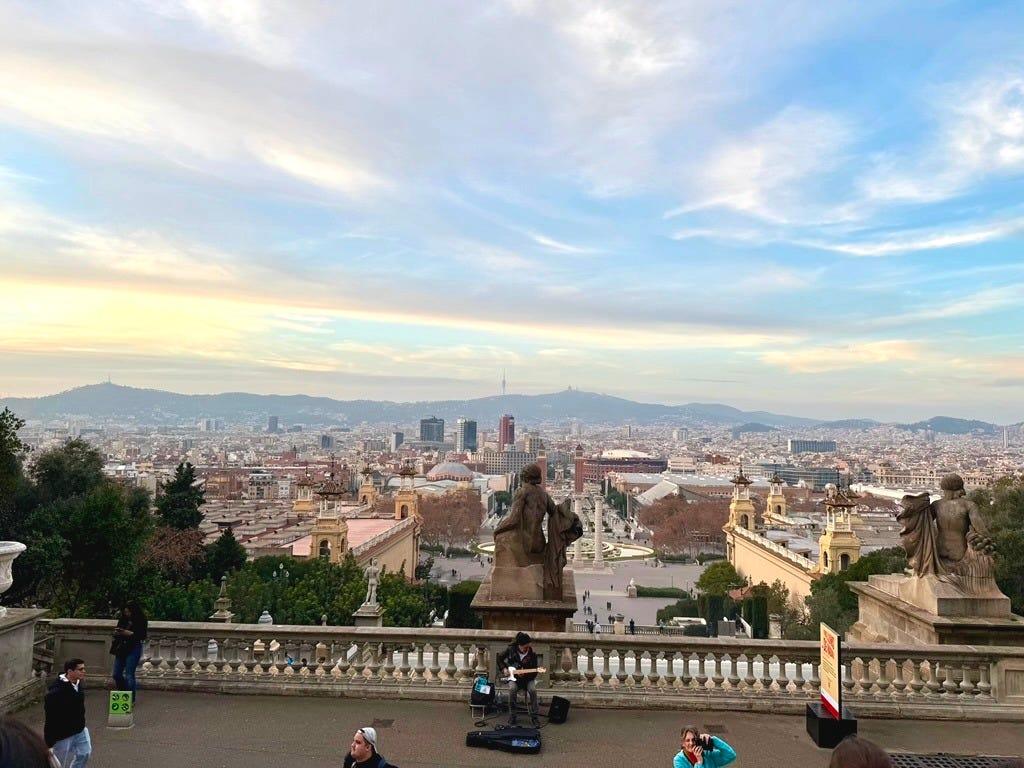
Barcelona is an amazing city. The history. The culture. The food — my goodness, the food. You could make a great vacation out of stuffing your days with museums and tours, or by simply walking around and taking in the architecture between frequent stops for charcuterie and vermouth. As an American, it feels different enough that you know you’re far from home (unlike, say, Dublin) but it’s easy enough to get around speaking English that an inexperienced traveler needn’t be intimidated. In short, it is the platonic ideal of an international destination.
Our itinerary
We spent a full week in Barcelona, Saturday to Saturday. That was a departure from our usual attempts to stuff as many experiences as we can into our bigger trips — I’d never planned a vacation for such a length in a single place. We didn’t necessarily need that much time, and I think we could have split the week up with another destination and still felt like we had done the city justice. (To the extent that you can ever say such a thing after visiting as a tourist.) Yet Barcelona is a marvelous city in which to simply be. To admire the architecture, to pop into a historical site or a beautiful church, to stop for a glass of cava. It was nice to have time to slow down.
Here’s a high-level overview of how we divided up our days:
Day 1: walking around Ciutat Vella (while fighting off post-redeye exhaustion)
Day 2: Sagrada Família (after sleeping off the jet lag)
Day 3: walking to, around, and back from Park Güell
Day 4: museums in Ciutat Vella
Day 5: museums on Montjuïc
Day 6: day trip to Sitges and Olèrdola
Day 7: crossing off our remaining to-do-list items
We went at what may be the nadir time for tourism: the middle of January, right after the end of the Spanish holiday season (Epiphany). This meant the weather was chilly (in the fifties on the Fahrenheit scale) and many sites we had on our list were closed for the season or had limited hours. The flipside is that, with the exception of Sagrada Família, we didn’t have to contend with any crowds. I can’t speak to how the vibes change in the summer, but we were happy to put on a jacket if it meant we had entire museum wings to ourselves.
Traveling to and around Barcelona
It’s not quite as easy to get from the United States to Barcelona as it is to Reykjavík or Dublin, but flight options were at least as numerous and cheap as for any European destination that hasn’t explicitly positioned itself as a layover hub for transatlantic travel. Understanding that border experiences can be tricky these days, immigration was easy and efficient once they opened for the morning (we were too far back to see whether customs really were not staffed until 9:00 am or if that was just the rumor in line, but the pace indeed went from stagnant to quick right around then) and including a leisurely stroll through the duty-free store we made it through passport control and to our gate within an hour of arriving at the airport to fly home.
Walking is our preferred mode of transportation on vacation, and Barcelona was a great place for that. The streets are well paved and (at least throughout the Eixample area) plotted out in a neat grid — neither of which I take for granted in old European cities. There are some hills and elevation changes but the terrain is far easier than, say, Lisbon. And as in Stockholm, traveling on foot also meant every excursion doubled as an architecture tour, because there’s an eye-catching façade or roofscape around every corner in this remarkable city.
Our limited experience with public transit was nice enough. We hopped on a very convenient bus from the airport to Plaça de Catalunya when we arrived, and we took the commuter rail for a day trip to Sitges. We had so much fun walking around the city that we never ended up taking the metro. Within Barcelona proper it seemed easy to grab a cab or ride-share (though you may think twice about using the latter).
Where we stayed
We got a very good (and seemingly uncharacteristically low) rate at the H10 Cubik. The place was swanky, clean, and comfortable, and the staff were incredibly kind and helpful. We had a couple seemingly fluky issues but if we got another deal I would happily stay there again.
The best part was the location, on the border of the new and old city zones. We were right on the main thoroughfare of Via Laietana and a stone’s throw from the transit hub of Plaça de Catalunya. For our fellow pedestrians, it was a 10-15 minute walk to the heart of the Gothic Quarter (where we found ourselves gravitating to just about every day) and within an hour of our farthest destinations within the city (Park Güell and Montjuïc).
On pickpocketing
When you tell someone you’re going to Barcelona, their first response may be a warning. Barcelona is known as the pickpocketing capital of Europe, and you’ll hear it described as a city-wide thunderdome of petty theft. Having lived most of my life in places decried as unsafe by people who don’t go there, I’ve learned to roll my eyes at such rhetoric. There are also theories that certain locals play up the pickpocketing problem as a means to stoke xenophobia, advocate for harsher criminal penalties, or scare away tourists. On the other hand, we heard these warnings even from level-headed friends who enjoy and have lived in major cities.
All I can say is that the Barcelona we experienced did not match the horror stories. We took precautions with what we kept on our person and carried our valuables in secure zippered and/or inner pockets, and I can imagine La Rambla and Plaça del Rei are far more crowded and chaotic in the summer than they were in mid-January. Acknowledging those caveats, we walked all over Barcelona at various hours and levels of alertness and felt just as safe (if not more so) as in any other large city I’ve been to. Neither locals nor tourists exhibited the guardedness we were told was de rigueur. It was probably smart that we avoided having our out phones on the street, but if we hadn’t heard otherwise beforehand, nothing about the vibe when we were actually in Barcelona would have made me feel like such caution were necessary.
Communicating
Barcelona ranks up there with Brussels among the most-multilingual cities I have ever visited. The prevalence of both Catalan and Spanish, to say nothing of the steady stream of visitors in one of the most-popular international destinations in the world, means people are accustomed to the dance of finding a common tongue. Within the city, virtually everyone we interacted with spoke fluent English; even some restaurants where we were clearly the only tourists had translated menus.
Some familiarity with a Romance language was helpful for getting around, but as in elsewhere in Iberia, we frequently found it was easier for everyone if we simply spoke English rather than fumbling through our limited vocabulary in the local tongue. Having said that, if you want to brush up on your Catalan before you go, we highly recommend The Lazy Linguist podcast. After a week of listening, my wife had learned enough to be confident in her sidequest to find skincare bargains. Locals also seemed to appreciate us tourists attempting to speak Catalan rather than Spanish.
Note that English is less ubiquitous outside Barcelona proper, so plan accordingly if you are going on any broader excursions. Otherwise, when you finish up your day at a remote archeological site with spotty cell service and realize that you are outside the closest taxi company’s driving range, you may discover that the kind receptionist at the visitor’s center cannot understand your description of your plight. Hypothetically speaking, of course.
Do and See
Part of what we loved about Barcelona was how easy it is to have a good time without a structured itinerary. Nonetheless, there are some incredibly cool destinations within the city that are worth planning a visit. If nothing else they’ll give you something to do until you’re hungry for another round of tapas.
Art
Park Güell
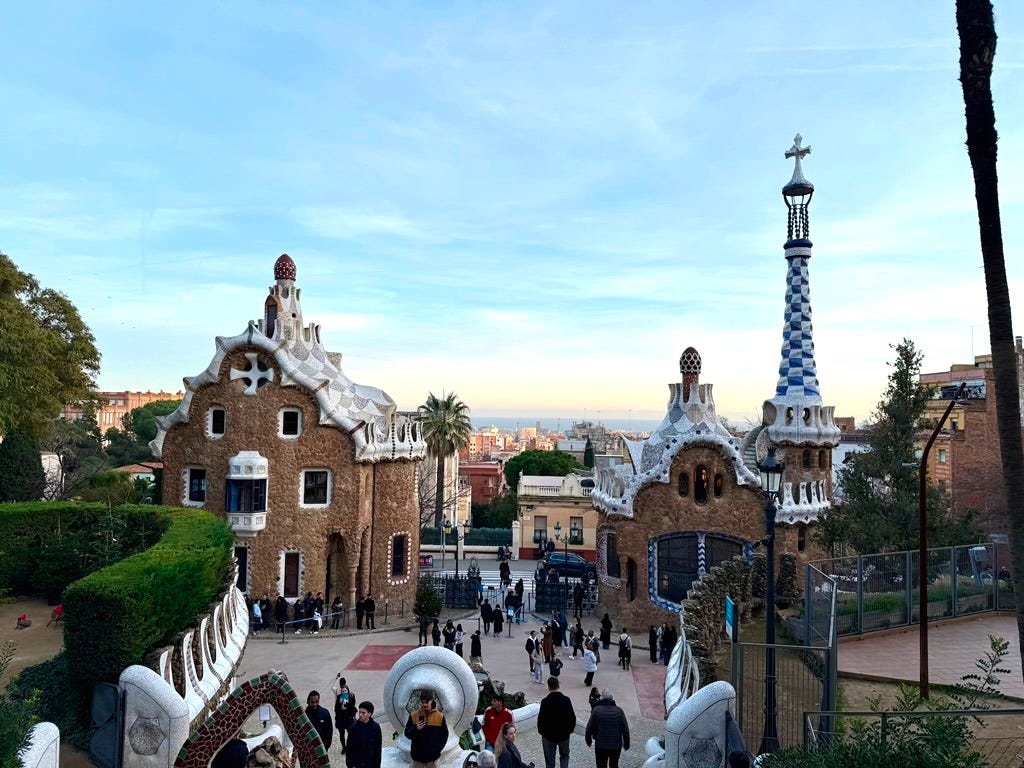
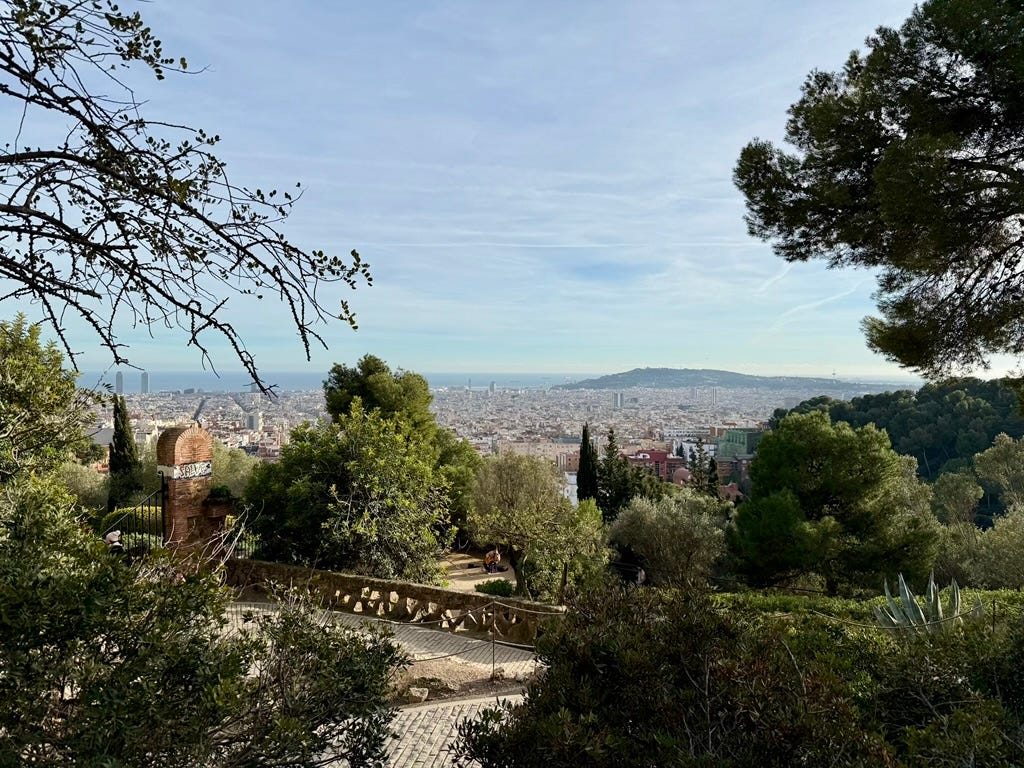
How does one begin to explain Park Güell? Describing Gaudí’s modernist fantasyland as an open-air art exhibition sounds too stodgy for a place where locals bring their kids to the playground. Calling it a garden park drastically undersells the scale and beauty of the buildings and horticulture. Whatever it is, the functional architecture and landscaping of Park Güell are alternately serene, surprising, and stunning. It’s as close as you can get to walking through a Dr. Seuss book, and well worth a leisurely stroll to take it all in.
Museu Nacional d’Art de Catalunya
Now this is an art museum. The enormous halls of the Palau Nacional teem with works representing myriad eras, styles, and media. Displays range from Romanesque frescoes preserved in modular cathedrals to Gaudí-designed furniture to a particularly moving exhibit of art from and about the Spanish Civil War. One collection opens with a note that there is no possible way to group the paintings therein in a cohesive way, so they simply did the best they could.
Do be prepared for just how big this museum is. If you don’t have truly all day to spend there, you may need to either powerwalk through the exhibits or limit your visit to one or two wings.
Museu Picasso
There are several Picasso museums around Europe, a fact of which you are constantly aware when you’re strolling the galleries in Barcelona. Partly because of the staff doth protest so much that unlike the others, and especially the one in Paris, this was the only museum Pablo Picasso himself was involved in establishing. And partly because it feels like the works on display were selected via draft rather than deliberate curation.
Don’t get me wrong, it’s a great museum. It makes sense that the Barcelona collection would be disproportionately focused on his youth in Spain. As relative art history amateurs, the tour taught us a lot about Picasso as a precocious yet more-traditional child painter, and as a bohemian adolescent growing bored with Europe’s predominant stodgy artistic taste. For an artist as prolific as Picasso, even an abridged revue of his later work is plenty to fill a gallery. But it felt like the museum equivalent of a biopic, more a series of vignettes about Picasso than the story of his life and career.
Moco Museum
There’s a fuzzy line between avant-garde and grift. Walking through Moco’s collections in the gorgeous halls of Palau Cervelló makes you constantly aware of this ambiguity. When the curators placed more-recent, less-digestible riffs on cultural iconography next to Andy Warhol’s, were they endorsing these new artists as the heirs to his legacy? Or was hanging less-interesting cartoonish pop art down the hall from the marvelous Keith Haring collection a gambit to make you question your plebeian taste if it leaves you unimpressed?
I’m not the arbiter of what counts as art, and I suspect provoking such questions is one of their goals. Maybe it doesn’t matter — when you’re immersed in the joyful lightshow of the Diamond Matrix, you won’t care whether or not it was designed as Instagram fodder. Yet I found myself genuinely frustrated by Moco’s display of NFTs, a pointless and ecologically destructive medium whose Ponzi-scheme market went belly-up not long after their exhibition opened. I tried to keep an open mind about a generative-AI display that purportedly makes digital art from your pulse, but it turns out you have to both subscribe to their mailing list and pay €35 if you want to see your personalized colorings. It’s an incisive metaphor for the AI industry, though I don’t think that was the intention. A month later I’m still scratching my head over a curation approach that celebrates both Banksy’s anonymous anti-consumerism and such a cynically invasive cash-grab.
Cathedrals
Sagrada Família
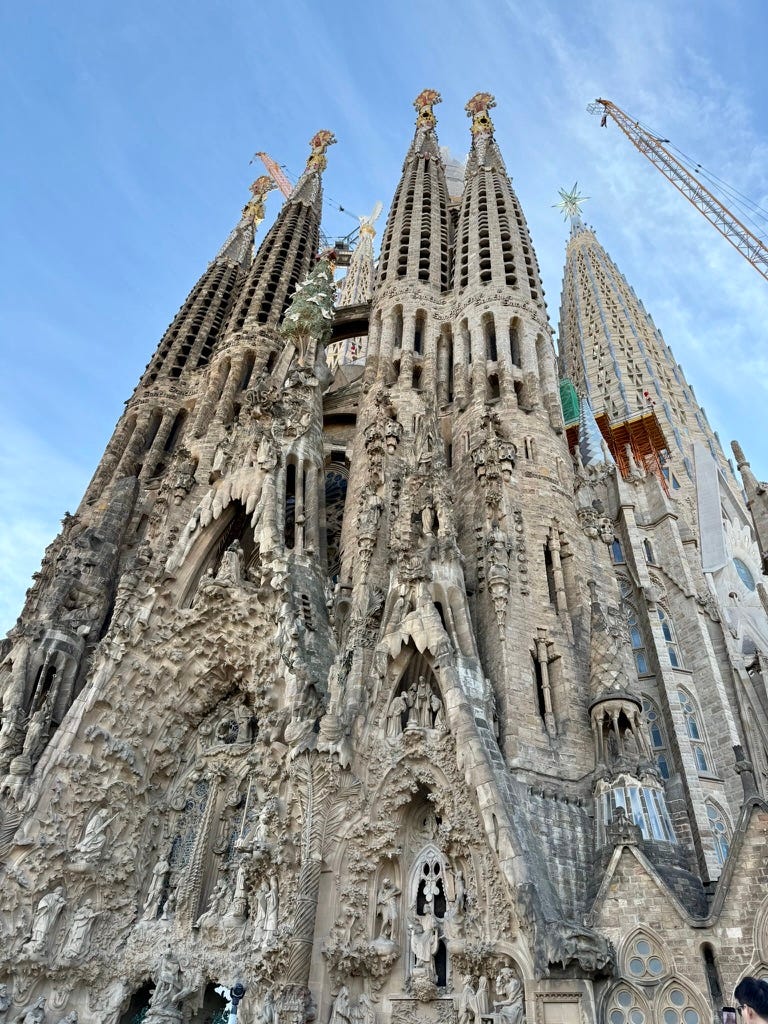
This is the free space on your Barcelona itinerary bingo card. The Sagrada Família may still be unfinished, but is already the tallest church on earth and a UNESCO World Heritage Site. You simply must visit the grandest construction zone on the planet.
The ornate sculptures built into the façades. The bright hues of the technicolor stained glass. The transfixing geometry of the columns, their branches twisting into the ceiling like a forest canopy. I have no particular affinity for either architecture or Catholicism, yet the sense of awe I felt when I walked in made me understand why nonbelievers convert. Once you pick your jaw off the floor, you can go up a tower for great views of the city and to see some of the elevated decor up close, and down to the basement to learn more about the church’s construction and the philosophies of Antoni Gaudí. We went on our first full day in Barcelona, and while the latter helped us appreciate the hallmarks of Gaudí’s designs for the rest of our trip, the flipside was that every other beautiful church we visited subsequently felt anticlimactic.
Barcelona Cathedral
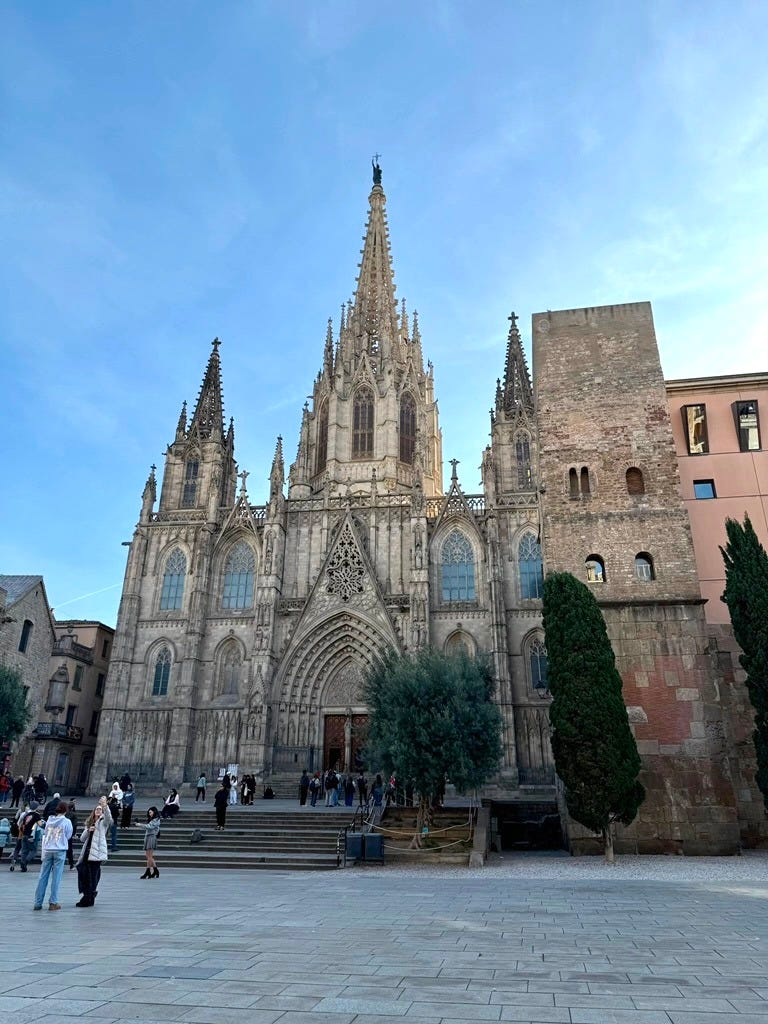
It isn’t fair that Barcelona Cathedral is an also-ran. Just about anywhere else, it would be the most-iconic church in the city. It’s a beautiful cathedral where you can feel the history, from the centuries-old paintings in the ornate choir stalls to the Roman-era foundations on a site where followers have worshipped since the early days of Christianity. It was also our favorite rooftop we went up to, offering stunning views of the old city. Visit the modern church before you go to the history museum (below) so you can fully appreciate the ancient ruins underneath.
…and other churches
One of the joys of walking around a European city is how easy it is to stumble upon a gorgeous church. For the price of a couple euros (or sometimes nothing at all) you can see some beautiful art and learn a little about the history of the communities who worship there. Santa Maria del Mar and Basilica of Our Lady of Mercy were our favorite such stops that we had not specifically flagged as destinations.
History and Archeology
Museu d'Història de Barcelona, Plaça del Rei
There’s a whole lot under one roof at MUHBA’s flagship campus, including extensive exhibits on Catalonia’s medieval and modern histories. (Or really three roofs, as the Palau Reial Major complex spans a cluster of grand buildings dating back 700 years.) The modern-curated collections are well worth a visit. But the real treasures are underground. An elevator outfitted as a time machine takes you down to the remarkably preserved Roman ruins of ancient Barcino. Houses, storefronts, and facilities for making wine and garum are still clearly identifiable nearly two millennia later. The extensive basement tour also takes you beneath Barcelona Cathedral, where the remnants of older churches form the foundation of the modern structure above.
Your ticket includes admission to come back another day, which was helpful since the couple hours we had budgeted for our first visit weren’t nearly enough to take in all the ancient splendor.
…and MUHBA’s other sites
There are many smaller museums operating under MUHBA’s auspices. These are much shorter yet still worthwhile visits, and each one we went to — including the well-preserved remnants of the Temple of Augustus and Via Sepulcral Romana, the medieval ruins below the markets of El Born and Santa Caterina, and the gallery of local Jewish history at El Call — was either free or inexpensive to get in.
Museu d’Arqueologia de Catalunya, Barcelona
One of my favorite museum displays I have ever walked through is tucked away towards the back of MAC. The exhibit on the early culture and Roman conquest of the Balearic Islands provided an engaging and detailed overview of a slice of history I knew nothing about, complemented by an impressively curated collection of contemporary artifacts. If only the whole building were like that room.
MAC’s extensive collections are broadly divided into two sections: one on Catalonia before Roman Barcino, from prehistory through the Phoenicians and Greeks; and one about the Roman Empire. The former was fascinating, though it was hard to fully appreciate as (except for the Balearic area) most of the displays lacked English translations. I’m not complaining that a foreign country did not fully cater to my linguistic limitations, though being able to read only a brief brochure at the start of each room was not the norm at most museums, and I wish the exception had not coincidentally been the place where I was most excited to learn about the objects in front of us. By contrast, the multimedia (and multilingual) IMPERIVM exhibit, which explored an impressive array of Roman artifacts through the imagined biographies of fictional actor-portrayed composite characters, was much more accessible, though we were not the target audience for this presentation style. In short, it’s a cool museum, but one whose collections are frustratingly hard to fully appreciate.
Sinagoga Major
Tucked away in an alley near the official MUHBA El Call museum is Sinagoga Major, which I found to be a more-moving monument to local Jewish history. It’s a tiny museum housed on a site where Jewish people have been praying for nearly two millennia, dating back to Roman Barcino. Even as a fairly secular Jew, I felt something standing in such a place and learning the story of how it was rediscovered.
MAC Olèrdola
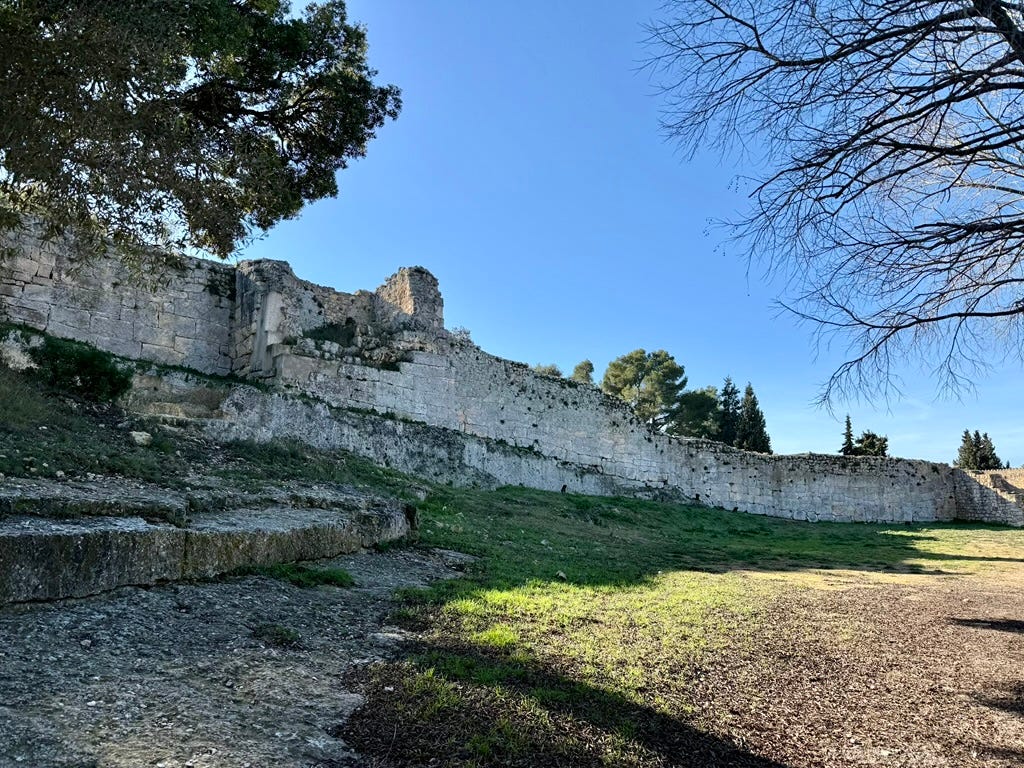
Forty kilometers outside the city lies one of the coolest archeological sites I’ve ever seen. With a history dating back to Bronze Age, Olèrdola’s structures (in varying states of ruin, with some impressively intact) represent three different eras of settlement: medieval, Roman, and pre-Iberian. You can walk among the ancient streets, step inside a millennium-old church, and climb up to the Roman watchtower from whence guards kept an eye on Via Augusta. And if you can tear your gaze away from the historic architecture, the serenity and beauty of the verdant rolling hills will make it apparent why so many peoples chose to call this place home. It’s not a place you’ll find in most tourist guides — every local we talked to seemed surprised that we knew about it, and for most of our time there we had the site to ourselves — which made it feel all the more magical to be there.
One note of caution: Secure your transportation in advance. It was easy enough to get from Barcelona to Olèrdola by taking the commuter rail to the beach town of Sitges and grabbing a cab from there. But finding a driver willing to pick you up from Olèrdola may be challenging in a remote area with poor cell service and a lower proportion of English speakers. Taxi Vilafranca eventually came to our rescue, though in retrospect I would have simply rented a car for the day.
Eat and Drink
Barcelona is one of the best food cities I’ve ever been to, period. Partly because the bar is so high: we swooned over nearly every single thing we ate. Partly because the tapes culture (Catalan for “tapas”) makes it easy to taste a lot of different dishes, or even to build your own progressive meal with a single course at each restaurant. And since we walked an average of 10 miles a day, we worked up enough of an appetite to stop for a snack with great frequency.
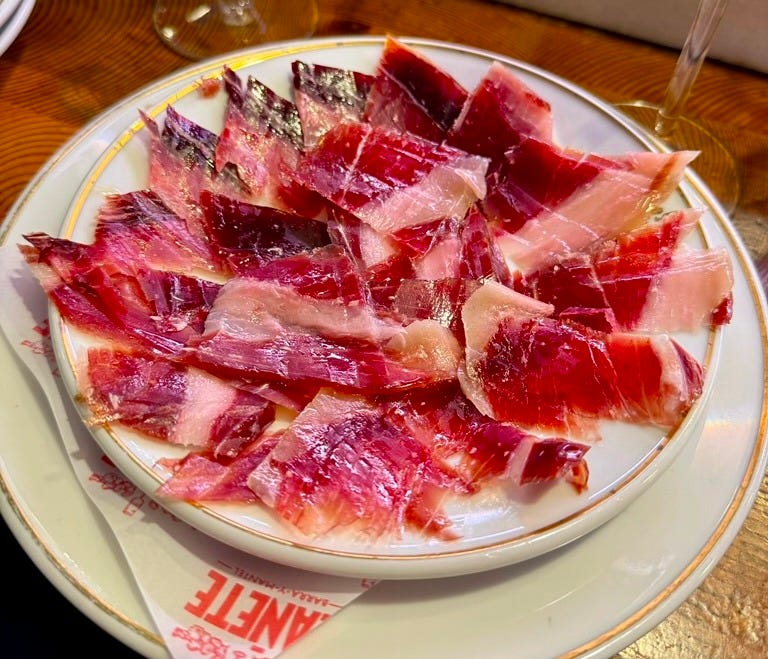
If you’re like me, the first thing that comes to mind with Spanish food is ham. I’m typically not huge on pork, but jamón ibérico truly is worth the hype. (Really all pig products are better over there. It took me until frustratingly late in our trip to realize that bacon was not a boring thing to order.) You’ll probably want pa amb tomaquet (tomato toast) with your jamón, and why not some manchego cheese? An incomplete list of foods you’ll see a lot of includes: botifarra and other sausages, bombas (potato-and-meat balls), patatas bravas, croquettes, cannelloni, xurros, and of course paella.
At some point in your travels you may also get thirsty. Espresso is part of the rhythm of life in Barcelona, and is brewed with a first principle of taste rather than an instant caffeine boost. On the adult-beverage front, Catalonia is mostly known for various forms of wine: cava, sangria, vermouth. We also found some excellent cocktails and good spots for both local and international craft beer.
Must-try
Come hungry and plan your trip around going to…
Tapeo
It was our penultimate night in Barcelona and we had a lot of restaurants left that we wanted to try. Our plan was to do a tapas crawl, wandering around El Born and splitting a small plate or two at a time. Then we got to Tapeo and we canceled the rest of our stops. And also came back for lunch the next day.
To start with, the vermut was the best we had in Spain: Lustau brand, served over ice with green olives and orange rind, a pour that tastes like a cocktail. The broad and creative menu is inspired by (but not beholden to) regional traditions, including braised leeks, asparagus tempura, lamb pintxo, and pork marinated in the Catalonian equivalent of Caribbean mojo. The highlight was the sausage cannelloni, an indulgent dish that I can best describe as if you crossed ravioli with biscuits and gravy. Tapeo was far and away our favorite restaurant in Barcelona, and one of the best I’ve been to in recent memory anywhere.
Bar Brutal
When we solicited advice from friends before our trip, Bar Brutal was far and away the most-popular recommendation we heard. We are excited to pay that forward. The ham there was second to none: a translucently sliced lomo ibérico that sure didn’t taste lean, and raw pancetta so indulgent that it almost felt shameful to eat. The cooked dishes we had — grilled mushrooms with celeriac cream and broccolini with peanut curry — were also inspired. And while the specialty behind the bar is wine, the Al Carajo with coffee-infused brandy and orange was simply one of the tastiest cocktails I’ve ever had. When I close my eyes and picture myself relaxing in Barcelona, my mind goes to Bar Brutal.
Strongly Recommended
If you can get there, you’ll be glad you made time for…
Bar Joan
I’m a sucker for a market. (Thanks, Grandma Joanne.) When you’re sitting at the counter at Bar Joan, you’re not just in Mercat de Santa Caterina, you feel like you’re part of it. They must get enough tourists to have translated menus, but both times we went (we liked our first breakfast so much that we returned for our last meal before we flew home) we were the only customers who didn’t seem to personally know the staff.
The food is cheap and fast: coffee and a solid breakfast’s worth of small plates will run you only about €10 a person, and if you’re in a rush you could be comfortably in and out in 20 minutes. (It’s also a place where you can linger, as we saw folks drinking wine carafes at mid-morning.) More importantly, it’s good. Savory saucer-sized omelettes, creamy croquettes, hearty sandwiches. All made with ingredients from the adjoining stalls. Eat there for a delicious peek into the real Barcelona.
Cal Pep
There is no menu at Cal Pep. Well technically there is — there’s one posted on the wall at the front, and you can go look at it if you must. But when you pull up a stool at the cozy counter, as we did on our first night in Spain, your server informs you that it isn’t important. They’ll describe what they’re featuring that evening (even grabbing what’s freshest out of the cooler to show you), and it doesn’t matter whether that’s what’s written down.
The fried artichoke was the first dish that caught our ears. The leaves were crispy, light, and tossed in an addictive flaky salt. The main event, though, was the steak. Our server helped us pick the best-looking hunk of meat of the cooler before it was cooked right in front of us to a textbook medium-rare. It was the best steak I’ve had in a long time, and it looked so good that the couple next to us ordered the exact same thing.
3 Focs
According to the prevailing wisdom, the only way to experience a real calçotada — a Catalonian custom of burning, peeling, and eating a local allium cultivar — is to go out into the countryside where the onions are harvested. But if you must try calçots in Barcelona proper, the place to go is 3 Focs. We were lucky enough to be there right at the start of the season: “Comença la temporada de calçotades,” they posted a couple hours before we stopped in for dinner.
The croquettes at 3 Focs (we tried both chicken and ham) were the best we had in Spain, and the ham-topped grilled mushrooms were also quite good. Still, the calçots, which look like big scallions or small leeks and taste like pearl onions, were the star. It’s a whole experience to unsheathe the steamed inner stalk from the ashen outer layer, but it’s worth the prep work when you take a bite of smoky allium smothered in the addictive romesco dipping sauce.
Recommended
Don’t go too far out of your way, but we can vouch for these places if you’re in the mood for…
Other great tapes spots
When I say the bar for food in Barcelona is high, what I mean is: Cañete and El Chigre 1769 would each be the second-best restaurant we’ve been to over two trips to Ireland. But I have to draw the line somewhere lest my superlatives lose their meaning. We had a nice lunch at Cañete, featuring particularly good jamón and comforting escudella soup, though it was one of the priciest restaurants we went to and it had touristy vibes. Meanwhile, everything we had at our snack stop at El Chigre 1769 was great — flavored vermut, xarcuterie, and a surprise taste test of a new chorizo-stuffed dates dish the chef was trying out — but we can’t endorse it quite as strongly without having sampled more of the menu.
Paella
There’s a common joke that tourists in Barcelona are worried about the wrong kind of robbery. The real crime wave in the city isn’t pickpocketing — it’s selling travelers mediocre paella at exorbitant markups. With that in mind, maybe locals would snicker about my recommending a paelleria where the family at the next table ordered hamburgers. Nonetheless, we had a great meal at De Tapa Madre. The meaty arròs de muntanya was delicious, as were the spicy patatas bravas with chorizo and cheese.
Food markets
La Boqueria is touristy. A common criticism on travel forums is that, in a city teeming with great markets, La Boqueria doesn’t feel like a place where locals do their shopping. Yet as someone who otherwise tries to avoid tourist traps, I don’t understand this complaint. Are you hoping to buy groceries while you’re on vacation? It’s a great spot to grab a snack and peruse the gorgeous arrays of meats and cheeses, and unless you’re staying in a home with a kitchen that’s what matters most.
If you want an more-authentic local experience, there seemed to be a nice market every couple blocks. We spent the most time at Santa Caterina, mostly because Bar Joan (above) is inside.
Coffee
The best coffee we had in Barcelona was at La Cassola, a quaint café in the Gothic Quarter. At about €3 for a great cappuccino and a really good snack-sized sandwich, it was also the best bargain of our trip.
You can get a good espresso at seemingly every food establishment in town, including ubiquitous local chain 365 and the cafés at the Picasso and National Art museums. For more modern-barista-style brews, we can also recommend Nomad and Pipol.
Desserts
Spain is storied for its chocolate, and we sampled on our trip lived up to the hype. Our favorite came from Be Chocolat, which sells both excellent confections and dreamy high-strength drinking chocolate. Chocolate Amatller was also quite good and strongly encourages free samples.
If you don’t get gelato, did you even go to Europe? We had delicious nightcaps at Oggi and delaCrem, though our favorite scoop was from Elisa, a ringer franchise from Rome. Speaking of which…
Italian food
It feels kind of silly to go to an Italian restaurant in Spain. But Catalonia is much closer to Italy than Rhode Island is, and a couple times on our trip we found ourselves craving a bowl of pasta. The two we went to couldn’t have been more different. BelleBuòn serves classic regional dishes, and every other table in the completely full restaurant seemed to be speaking Spanish or Catalan. Benzina is geared more towards the Instagram demographic, and its modern fusion fare would fit perfectly in some hip Boston neighborhood, both stylistically and linguistically. Both were delicious.
Non-wine drinks
Dry Martini may not feel like an authentic Barcelona experience. But when you’re sitting in a speakeasy sipping their smooth eponymous martini, or a chocolatey absinthe potion served smoking in a glass pipe, you won’t be bothered by such concerns. Same goes for La Whiskeria, a cozy saloon featuring the largest selection of whiskey I’ve ever seen.
If beer is more your speed, BierCab boasts an impressive tap list of both local and international brews and also serves good snacks. We can also recommend the Belgian selection at Lambicus, a serene plaza beer at La Rovira, and the generously poured flights at CocoVail, a sports bar that also functions as a cultural U.S. consulate.
Snacks in Sitges
Our brief time in Sitges was not the culinary highlight of our trip, which is probably to be expected when you go to a beach town on a weekday in the middle of winter. We had nice coffee at Gallo, good xurros and chocolate at La Xurreria, and a grand seaside sangria at Gaby’s.
More-adventurous eats
By now you may have noticed some types of food I have not mentioned. I am allergic to shellfish, I don’t like most other seafood, and I am turned off by offal. (Judge me if you must, but at least the former isn’t my fault.) This took a fair amount of Catalan cuisine off the table for me. In particular there were three particular local-oriented meals that I wished I could have enjoyed more fully: the bustling lunch rush at La Cova Fumada, the deli-counter experience at Quimet & Quimet, and snacks and drinks at Vermuteria Puigmartí. I bet (and have heard) each is great if you look at more of the menu than I did.
tl;dr:
Best famous attractions: MUHBA Plaça del Rei, Park Güell, Sagrada Família
Best lesser-known attractions: MAC Olèrdola, Sinagoga Major
Best views: Park Güell, Barcelona Cathedral
Best food: Tapeo
Best budget bites: Bar Joan, La Cassola
Best ham: Bar Brutal, Cañete
Best dessert: Elisa, Be Chocolat
Best coffee: La Cassola, Nomad
Best beer: BierCab, Lambicus
Best vermut: Tapeo, El Chigre 1769
Best cocktails: Bar Brutal, Dry Martini
You can also see everywhere we went and ate on this annotated Google Map!